















.jpeg "Sprunki")














.jpeg "Geometry Dash Lite 3D")







.png "Idle Sheep Fight")
.png "Geometry Jump")




.jpeg "Hole IO")


.png "Corn Tycoon")

.jpeg "Slope Run")


.jpeg "Knife Hit")









.jpeg "Monkey Mart")

.png "Alone on Island")
.png "Block Blast")







.png "Kiwi Clicker")




.png "Apple Worm")









.png "Candy Crush")


Slope 2
Slope 2 is a high-speed arcade run where a neon ball dives down endless slopes. React fast, stay balanced, and chase records at insane speed now at once.
Slope 2: A Relentless Test of Speed, Focus, and Control
Slope 2 throws you into a glowing 3D world where hesitation is punished instantly. There are no checkpoints, no brakes, and no second chances, only a rolling ball racing down endless floating slopes at ever-increasing speed. Your mission is simple in theory: survive as long as possible. In reality, every second becomes a fight between control and chaos.
A World Built for Pure Momentum
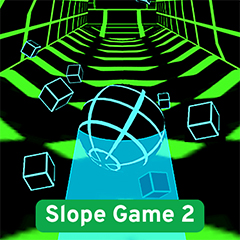
The speed of the gameplay in Slope 2 constantly changes
The neon-lit environment of Slope 2 feels alive and unforgiving. Narrow platforms, sudden drops, sharp turns, and deadly red obstacles appear in rapid succession, forcing you to react on instinct rather than calculation. The longer you survive, the faster the game becomes, turning the experience into a true adrenaline rush.
Simple Controls, Brutal Difficulty
Slope 2 uses minimal controls, left and right movement only, but mastering them is far from easy. At high speed, even the smallest overcorrection can send the ball flying into the void. The game challenges you to make smooth, precise movements while maintaining constant awareness of what lies ahead.
How to Survive Longer in Slope 2
Mastering Movement and Balance
Keeping the ball close to the center of the track gives you more room to react. Gentle, controlled movements are far more effective than sudden turns, especially as the ball accelerates. Staying calm under pressure is essential if you want to maintain control.
Reading the Path Ahead
One of the most important skills in Slope 2 is learning to look forward. By anticipating upcoming curves, gaps, and slopes, you can prepare your movements early, reducing the risk of panic reactions that often lead to failure.
Building Consistency Through Practice
Patterns may feel random at first, but regular play helps you recognize common track formations. Over time, your reactions become automatic, allowing you to maintain momentum and achieve longer runs with greater confidence.