











.jpeg "Sprunki")









.jpeg "Geometry Dash Lite 3D")






.png "Idle Sheep Fight")
.png "Geometry Jump")




.jpeg "Hole IO")


.png "Corn Tycoon")

.jpeg "Slope Run")


.jpeg "Knife Hit")








.jpeg "Monkey Mart")

.png "Alone on Island")
.png "Block Blast")






.png "Kiwi Clicker")



.png "Apple Worm")






.png "Candy Crush")


Pocket Chess
Pocket Chess challenges your intellect with engaging checkmate puzzles in just 1-3 moves. Master tactics, recognise patterns, and conquer every level.
How to play Pocket Chess?
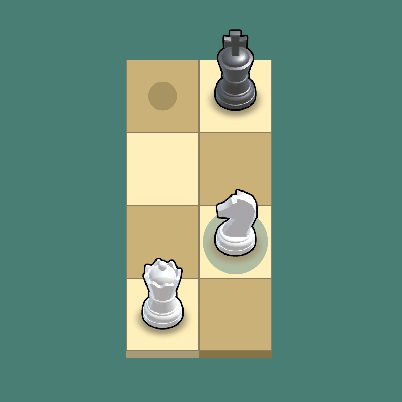
Moving the pieces
Similar to playing Uno Online, you will use your mouse to move the pieces to the desired position. If you are a beginner, the system will suggest possible moves for your pieces. Note that these are not necessarily optimal moves; they may lead to losing pieces or being checkmated. Consider your moves carefully and optimize each step to avoid being cornered.
How to move the pieces
In Pocket Chess, there are a total of 6 different pieces, and each piece has its own unique features and moves that you need to understand.
- Bishop: moves only diagonally.
- Rook: moves along the same row or column.
- Queen: moves any number of squares along the same row, column, or diagonal.
- Knight: moves to the nearest square not on the same row, column, or diagonal. You move this piece in an L-shape, two squares along a row or column and then one square perpendicular. This piece can jump over any of your or your opponent's pieces.
- Pawn: moves one square forward along the column, always towards the opponent. You can move two squares forward along the column instead of one, provided there is enough space. To capture an opponent's piece, the piece must be on the diagonal in the direction of movement.
- King: can only move one square in any direction, except for castling. Also, this piece cannot be put in check.
Tips for winning
Focus on checkmating
Start by identifying your opponent's position and limiting their escape routes. Your sole objective is to checkmate the king and capture all of your opponent's pieces. Think backward: Imagine the final checkmate position first, then work backward to find the initial moves.
Observe the entire chessboard
At the beginning of the game, take time to observe the positions of both your and your opponent's pieces. This will help you determine the most logical moves. Look for tactics such as capturing your opponent's pieces to create open checks and double attacks.
Use the undo function to experiment
Don't be afraid to try different moves. Use the undo function to experiment with different strategies without any penalty.